Anomaly guide

17 anomaly classes found on solar plants

The SolarDetech platform automatically assigns every anomaly it finds in thermal and RGB imagery to one of 17 classes. This guide sets out the definition of each class, its signs in the imagery, its possible causes and the action required in the field.

The classes are defined following the IEC TS 62446-3 methodology. Thermal classes are determined from the panel's temperature difference under load. This difference is normalised to irradiance and compared with neighbouring panels. RGB classes are determined from the visible-light image, and some classes from both channels assessed together.

Priority is set with both production loss and safety risk in mind. There are four priority levels: Very high, High, Medium and Low. Junction box heating and reversed polarity are rated Very high even when the production loss is small. For hot cell and diode classes, priority rises as the measured temperature difference grows.

Classes
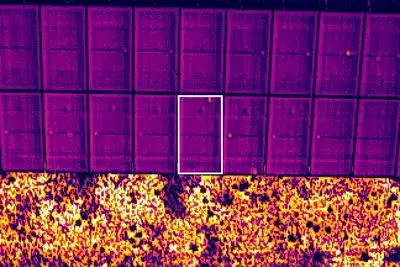
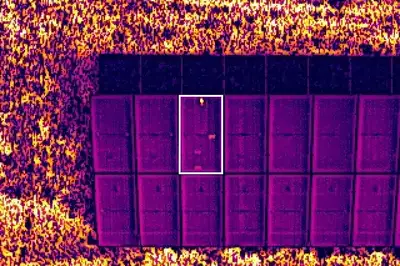
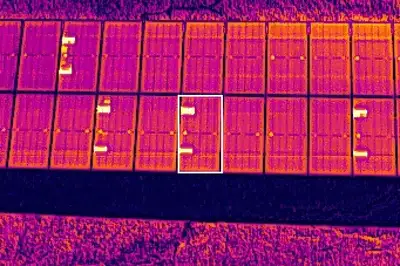
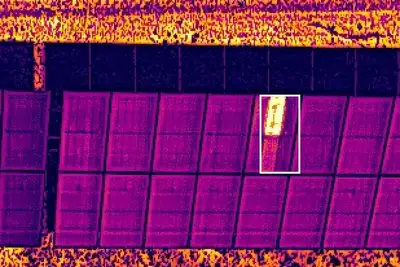
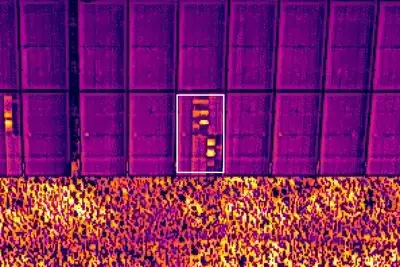
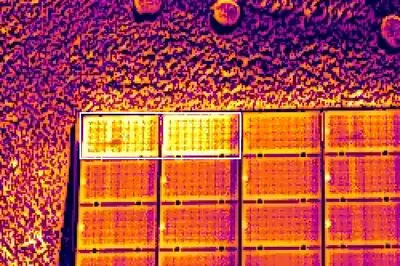
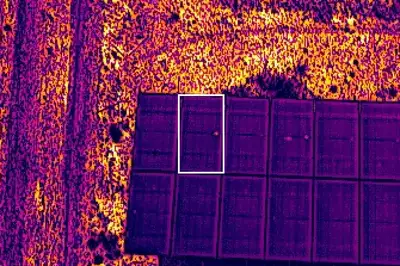
  1. Single hot cell. Thermal image from a real inspection, peak temperature difference against its neighbours +4.9 K.

    Single hot cell

    Cell

    Channel
    Thermal
    Priority
    Medium → Very high
  2. Hot spot. Thermal image from a real inspection, peak temperature difference against its neighbours +18.4 K.

    Hot spot

    Hot-Spot

    Channel
    Thermal
    Priority
    Medium → Very high
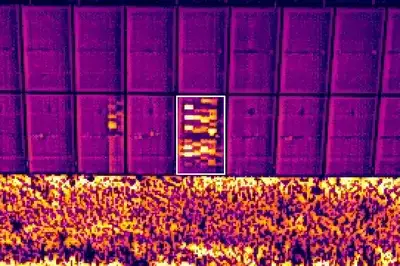
  3. Multiple hot cells. Thermal image from a real inspection, peak temperature difference against its neighbours +31.3 K.

    Multiple hot cells

    Cell-Multi

    Channel
    Thermal
    Priority
    Medium → Very high
  4. Single diode / substring. Thermal image from a real inspection, peak temperature difference against its neighbours +64.2 K.

    Single diode / substring

    Diode

    Channel
    Thermal
    Priority
    Medium → High
  5. Multiple diodes. Thermal image from a real inspection, peak temperature difference against its neighbours +17.4 K.

    Multiple diodes

    Diode-Multi

    Channel
    Thermal
    Priority
    High
  6. Physical damage. Real images from delivered inspections.

    Physical damage

    Physical-Destruction

    Channel
    RGB + thermal
    Priority
    Very high
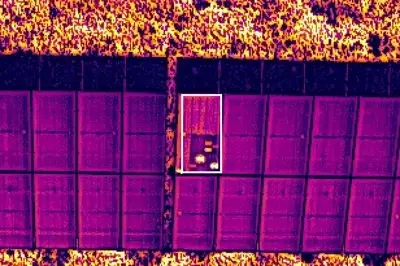
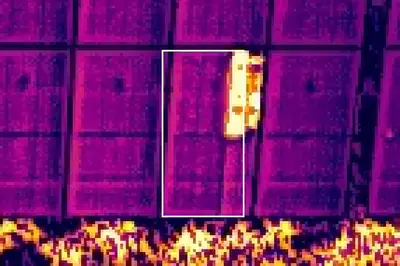
  7. Offline module. Thermal image from a real inspection, peak temperature difference against its neighbours +13.1 K.

    Offline module

    Offline-Module

    Channel
    Thermal
    Priority
    High
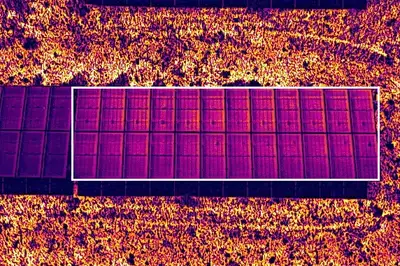
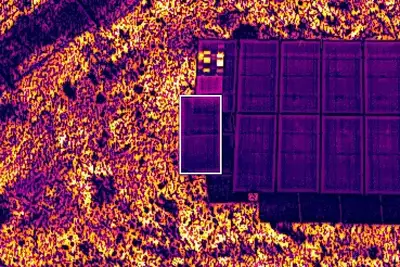
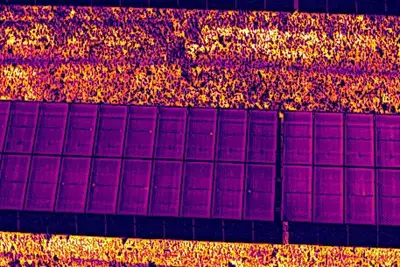
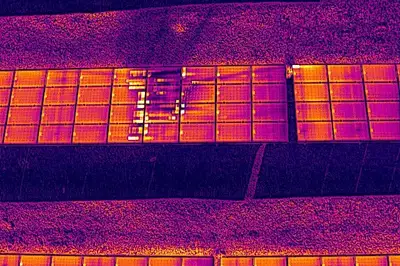
  8. String fault (3 or more consecutive modules). Thermal image from a real inspection, a whole table with its neighbours.

    String fault (3 or more consecutive modules)

    String-Fault

    Channel
    Thermal
    Priority
    High · very high if arcing
  9. Junction box / terminal. Thermal image from a real inspection, peak temperature difference against its neighbours +17.9 K.

    Junction box / terminal

    Junction-Box

    Channel
    Thermal
    Priority
    Very high
  10. Reversed polarity. Thermal image from a real inspection, peak temperature difference against its neighbours +14.6 K.

    Reversed polarity

    Reversed-Polarity

    Channel
    Thermal
    Priority
    Very high
  11. Glass breakage. Thermal image from a real inspection, peak temperature difference against its neighbours +64.0 K.

    Glass breakage

    Glass-Breakage

    Channel
    RGB
    Priority
    Very high
  12. Missing / detached module. Thermal image from a real inspection, peak temperature difference against its neighbours +2.6 K.

    Missing / detached module

    Missing-Module

    Channel
    RGB
    Priority
    High · very high if hanging
  13. Soiling. Real images from delivered inspections.

    Soiling

    Soiling

    Channel
    RGB
    Priority
    Low
  14. Bird droppings. Real images from delivered inspections.

    Bird droppings

    Bird-Droppings

    Channel
    RGB ≤1 cm/px
    Priority
    Low
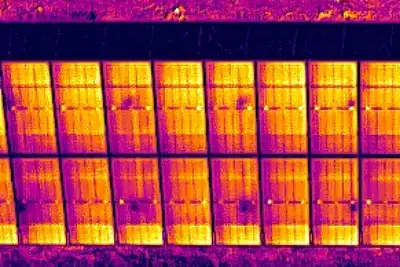
  15. Biological growth. Thermal image from a real inspection, peak temperature difference against its neighbours +3.8 K.

    Biological growth

    Biological-Growth

    Channel
    RGB ≤1 cm/px
    Priority
    Low
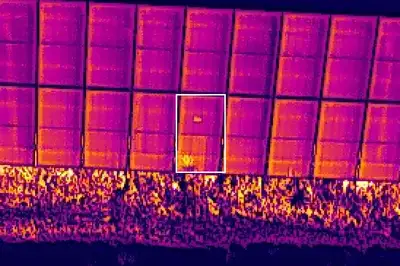
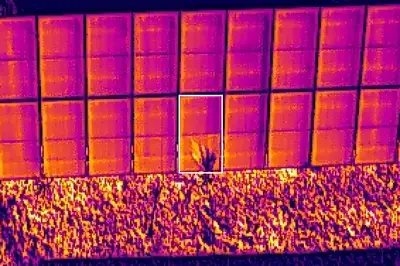
  16. Vegetation shading. Thermal image from a real inspection, peak temperature difference against its neighbours +4.2 K.

    Vegetation shading

    Vegetation

    Channel
    RGB + thermal
    Priority
    Low
  17. Structural shading. Real images from delivered inspections.

    Structural shading

    Shadowing

    Channel
    RGB + geometry
    Priority
    Low

See the anomalies in your plant, panel by panel

Send us your panel count and plant location, and we will send you a quote within 24 hours at most.